Pet photography: plan for movement and focus on the moment
Use a calm setup, a lower viewpoint and a repeat-shot review to photograph pets on a phone or camera without guaranteed settings.
ShotAgain editorial · 3 min read
Quick answer
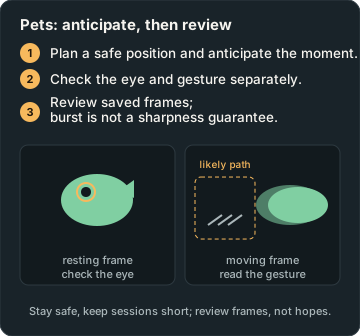
- Plan a safe position and anticipate the moment.
- Check the eye and gesture separately.
- Review saved frames; burst is not a sharpness guarantee.
Start with what the animal is already comfortable doing. A cat resting by a window and a dog running across a garden present different photographic problems. Choose a safe, familiar place, keep the session short and let the pet stop. The practical goal is a readable moment with the animal at ease, rather than a perfect pose held at any cost.
Prepare your position first
Look at the background before asking for attention. Move so the face is not hidden against a busy pattern, and choose a position where you will not block a path or lose awareness of the surroundings. If another person can comfortably handle the pet, let them help while you concentrate on the camera.
Try lowering the camera toward the animal's height, then compare with a view from above. A low viewpoint may make the pet's expression more prominent; a high view can suit a different story. Neither is mandatory. Do not crawl into an unsafe space or remove a lead merely to clean up the frame.
Separate a portrait from an action photograph
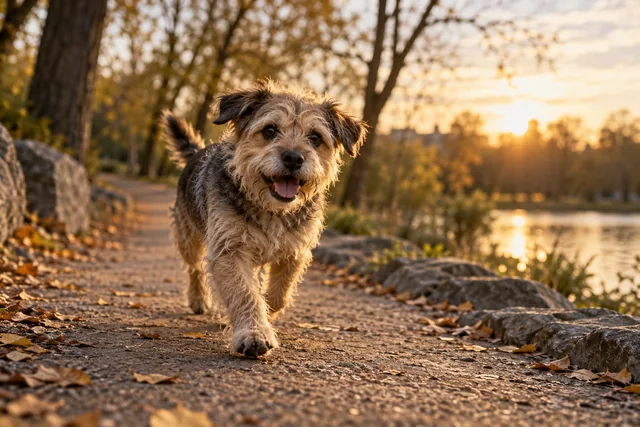
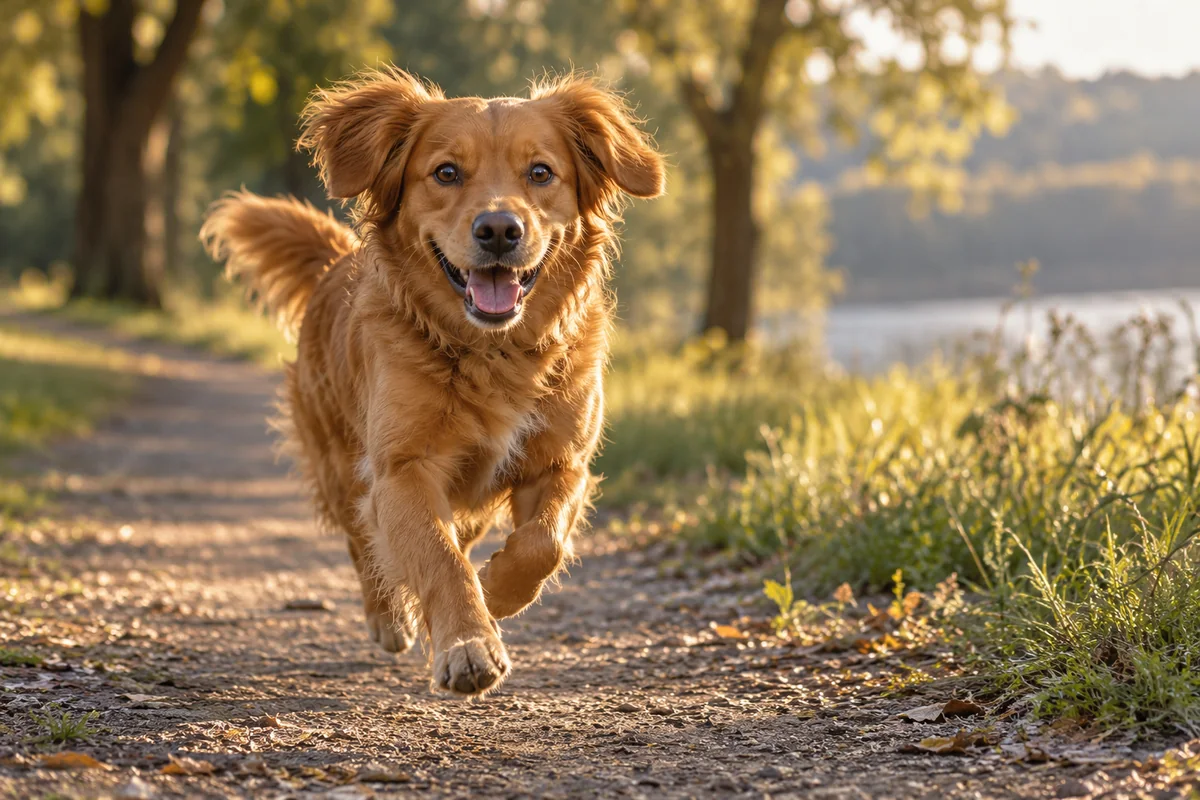
For a resting pet, begin with the eye you want sharp and make a quiet frame. For a moving pet, anticipate a small area it is likely to pass through and leave enough room around the body. A tight crop is harder to maintain when the subject changes direction unexpectedly.
Nikon's animal-detection lesson describes eye focusing and notes limitations when eyes are obscured, as well as different focus choices for moving subjects. Its instructions apply to the named cameras, not every device. If your phone or camera offers animal detection, consult its own guide and inspect whether it selects the intended animal and eye.
Respond to movement with a practical change
If the background is clear but the pet is streaked, subject movement may be contributing. A shorter exposure can help record a smaller part of that movement. The shutter-speed guide explains this relationship; it does not give a setting that guarantees every running pet will be sharp.
On a camera with suitable controls, try a shorter exposure and review the result. On a phone, try more available light or photograph a pause rather than relying on a mode label. Burst capture, when available, gives you several moments to review, but does not make every frame focused or well timed. Check the saved files before deciding the problem is solved.
Pay attention to the face, not only the outline
An animal's nose, eyes and ears can lie at different distances from the camera. A sharp nose does not necessarily mean the eyes are clear. Review the important eye and enough of the face to support your intended portrait. If the body is moving, inspect it separately so you do not confuse an acceptable moving tail with an unreadable face.
Dark fur against a dark background may need another viewpoint or different light. Avoid automatically brightening the whole picture until the fur loses its character. Look for the particular boundary or texture you want to show, then try a small change and compare.
Use a pause-and-move exercise
Take picture A while the pet is resting comfortably. Take picture B during a familiar gentle activity, with any needed help from its handler. Keep the surroundings similar, and note what changed in the focus approach or available light. Stop if the activity is no longer comfortable for the animal.
Compare the face, the background and the gesture at the same viewing size. Choose a favourite moment and name one technical change worth trying next time. A lively, slightly imperfect gesture may matter more to you than a technically cleaner but uncharacteristic pose. That preference is valid; it does not need to be translated into an objective ranking.
Compare two real pet photographs and tell ShotAgain whether you wanted stillness or action. Its text feedback may suggest another attempt, but it cannot reliably infer an animal's health, temperament or welfare from a photograph alone. Your knowledge of the animal and its comfort takes priority.
Try it: Compare pause and movement
- Choose a safe, familiar place and comfortable activity.
- Make a resting frame and a moving frame without forcing the pet.
- Review face, gesture and background; record focus and light differences.
Record changes in light, exposure, viewpoint or subject movement; the pair is not proof of one isolated cause unless other conditions were controlled.
Sources
Put it into practice
Upload a real shot and get coaching on the decisions in it.